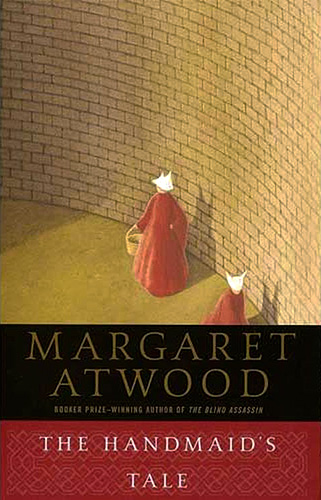
The Handmaid’s Tale by Margaret Atwood, released in 1985, is a speculative-fiction novel that begs the question: what happens when dystopia meets totalitarianism? This novel follows a woman named Offred, a handmaid in the Republic of Gilead. Gilead was formed after the U.S government was taken over by a fundamentalist group called the Sons of Jacob. The Sons of Jacob then formed Gilead, a totalitarian society, where women are treated as property to men of high enough status to “own” a wife.
In this critically acclaimed novel, Atwood uses Offred’s story to educate the dangers of conformity and the necessity of hope and perseverance in times of turmoil. Atwood’s storytelling and character writing are brilliant, the characters and stakes feel real, you want the best for Offred, and other titular characters like Serena Joy, despite their antagonistic roles. Offred’s unreliable narrating adds a layer of reality to the story, being told in fragments with the validity of certain statements and facts being questioned by Offred herself. Atwood purposefully withholds certain knowledge about the state of Gilead, to make crushing reveals, such as the purpose of the handmaids.
The Handmaid’s tale serves as a cautionary tale of what happens when we turn a blind eye to injustice and choose comfort and compliance over change and all the discomfort that comes with it. With the current political state of the world, I feel this message is especially important. The Handmaid’s Tale’s writing still holds up today, the themes and overall message of the book, still serving as a catalyst for conversation today.