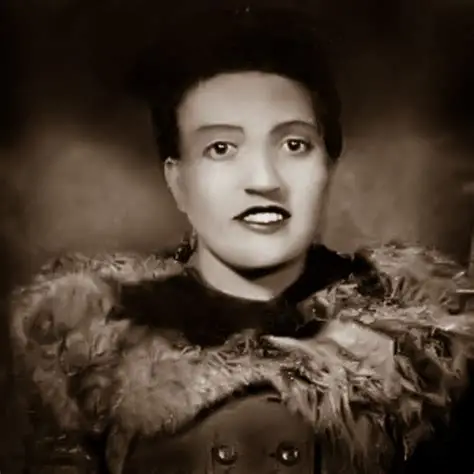
RHS’s biology class is taking time to learn about Henrietta Lacks and her immortal cells. Lacks was an African American woman, born August 1, 1920, in Roanoke, Virginia. She was four years old when her mother died, and her family moved to Clover, Virginia. She stayed on her family’s cotton farm, and shared a room with her first cousin David “Day” Lacks. David and Henrietta had their first of five children, when Henrietta was only fourteen, they named him Lawrence Lacks.
On January 29, 1951, Lacks visited John Hopkins hospital, due to a “knot” feeling in her womb. As her cousins who she’d informed about this feeling had suspected, this knot turned out to be a pregnancy. After giving birth to her fifth and final child, Lacks had a severe hemorrhage. Her doctor, Howard W. Jones, took a biopsy of a mass found in Lacks’s cervix. Lacks was told she had an epidermoid carcinoma of the cervix. In 1970, physicians discover that she actually had adenocarcinoma. This would not have interfered with her treatment, as it was a common mistake at the time. Lacks was treated with radium test tubes for her carcinoma. During these treatments, two samples were taken from Lack’s cervix, without her knowledge or permission. These samples were given to George Otto Gey, a physician and cancer researcher at Johns Hopkins.
Gey examined these cells, and found that they reproduced at an extremely high rate, and could be kept alive along enough for more in-depth examination. While testing Lacks’s cells, Gey found that he could create cell lines simply by isolating a single cell. They became known as HeLa cells, as Gey used the patient’s two first and last initials to name cells. This ability led to many scientific breakthroughs, such as the polo vaccine. HeLa cells were sent all around the world, and have been involved in over eleven thousand patents. Lacks had never given permission for her cells to be harvested. At the time, consent for harvesting cells was not required. In the 1980s, Lacks’s medical records were published without the consent of her family. This caused concern for the family, as it could reveal sensitive information about them. It wasn’t until 2021 that Lacks’s family decided to file a lawsuit against Thermo Fisher Scientific, for profiting on Lacks’s cells without the family’s consent. It wasn’t until February of this year that Lacks’s family received justice. Thermo Fisher Scientific settled with the family on undisclosed terms.
Lack’s story stands as a beacon against the never-ending fight against racial discrimination. Her family not receiving compensation for all Lacks’s medical contributions until this year shows how justice is truly a never-ending battle.